A traditional Egyptian drink starts with one natural ingredient.
A flower, a pod, a grain, or a nut extract.
Around it, rituals form.
Even adopted traditions, like tea, are remade in Egypt’s own image.
In this guide, we explore some of the most popular Egyptian drinks and show you how to order them like a local.
Quick Guide to Ordering Egyptian Drinks
You can master an Egyptian greeting, but standing before a juice shop’s untranslated menu is a different challenge.
Here’s how to order and enjoy Egyptian drinks as the locals do.
| Drink | Main Ingredients | Season | Best Experience | How to Drink | What to Ask For |
|---|---|---|---|---|---|
| Karkade | Dried hibiscus flowers, water, sugar | Year-round | Juice shops and guest houses in Luxor & Aswan | Hot or cold | Kar-ka-deh |
| Sugarcane Juice | Fresh sugarcane stalks | Summer | Juice shops across Egypt | Cold | ‘Aseer ‘Asab |
| Halabessa | Chickpeas, water, tomatoes, lemon juice, cumin, chili | Winter | Street carts along the Nile & Alexandria Corniche | Hot | Ḥa-la-be-ssa |
| Sahlab | Milk, sahlab powder, sugar, nuts, coconut | Winter | Street stalls in Cairo & Alexandria | Hot | Saḥ-lab |
| Kharoub | Carob pods, water, sugar | Year-round | Traditional juice shops around Old Cairo | Cold | Khar-roub |
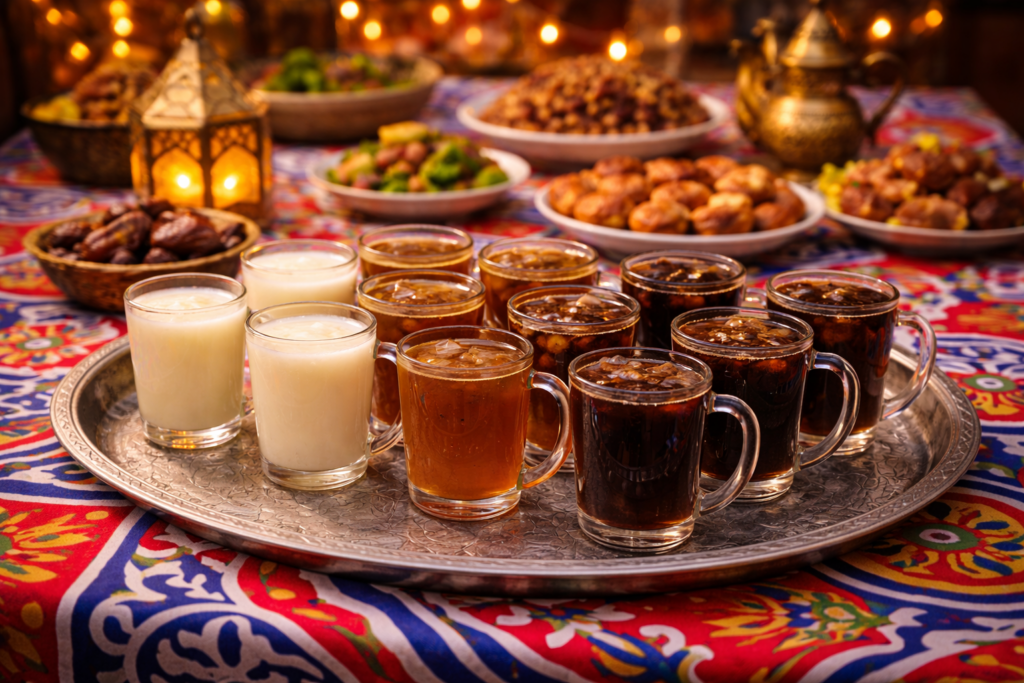
| Tamr Hindi | Tamarind pulp, water, sugar | Ramadan | A Ramadan street stall in Cairo or Giza | Cold | Tamr Hin-di |
| Erk Sous | Licorice root, water | Ramadan | Evening Ramadan stalls around Khan El Khalili or Old Cairo | Cold | ʿEr’ Sous |
| Sobia | Coconut milk or rice, sugar, vanilla | Ramadan | Ramadan stalls in Cairo, Giza, Alexandria | Cold | So-bb-ya |
Everyday Egyptian Drinks
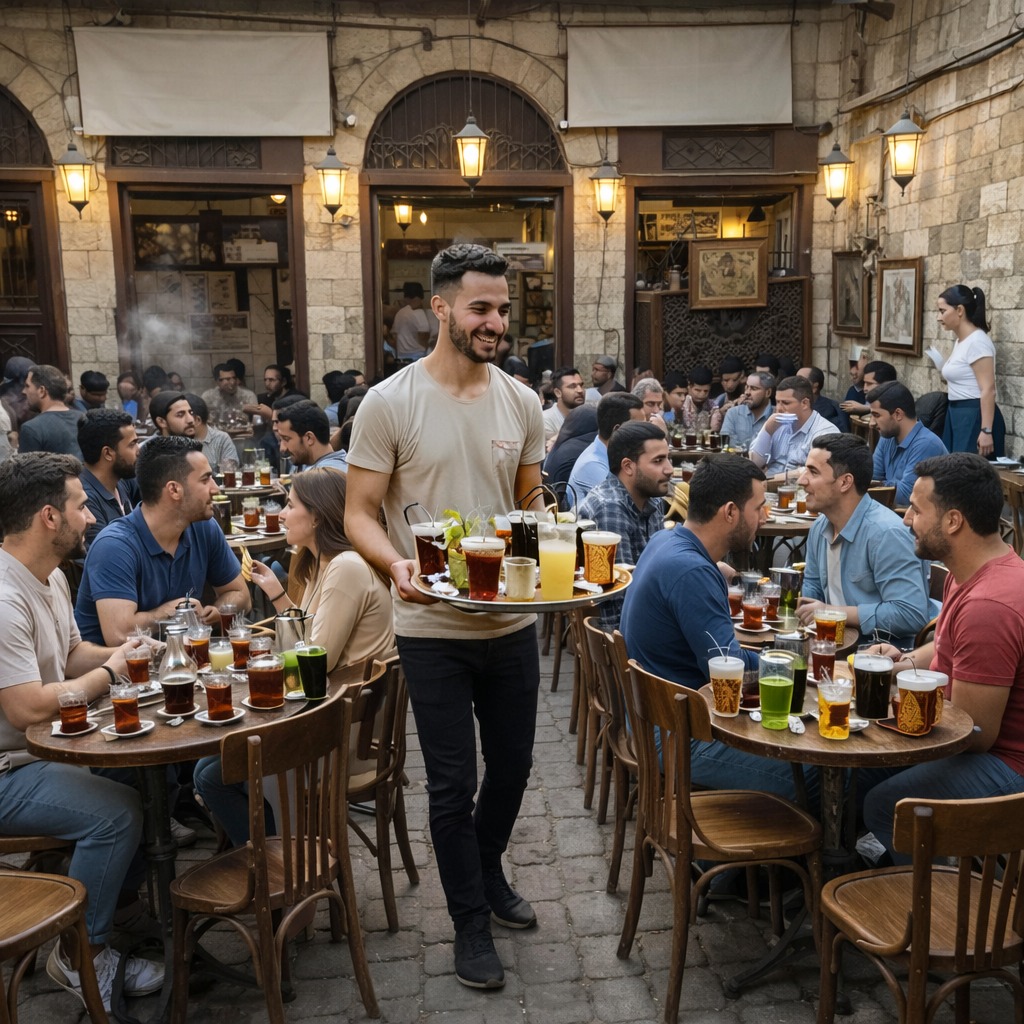
While some drinks are tied to seasons or rituals, these cornerstone beverages form the daily rhythm of Egyptian life.
Karkade (Hibiscus Tea)
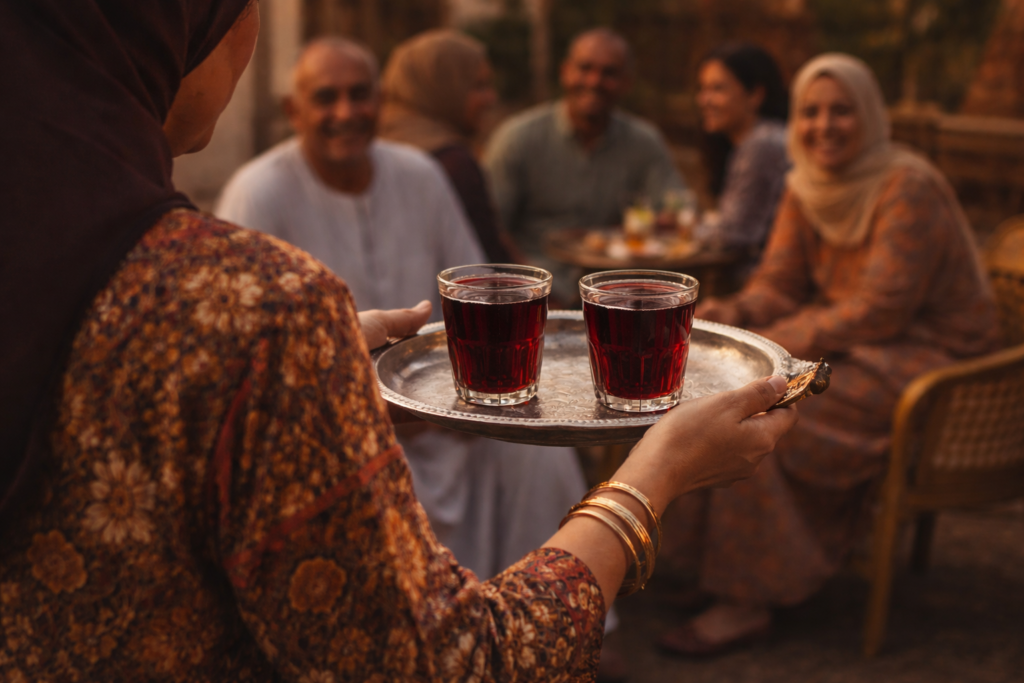
Hibiscus tea, known locally as Karkade, is one of the oldest Egyptian drinks still enjoyed today.
The crimson hibiscus petals are boiled and strained to be served hot for comfort or poured over ice to refresh.
Karkade is tied to celebration. On tours through Egypt’s historic districts, you may come across a traditional wedding, where guests raise Karkadeh glasses like a non-alcoholic champagne.
Karkade is also valued for its health benefits. When served iced, it is known to help lower blood pressure and support heart health. It is also believed to aid metabolism and weight management.
Aseer Asab (Sugarcane Juice)
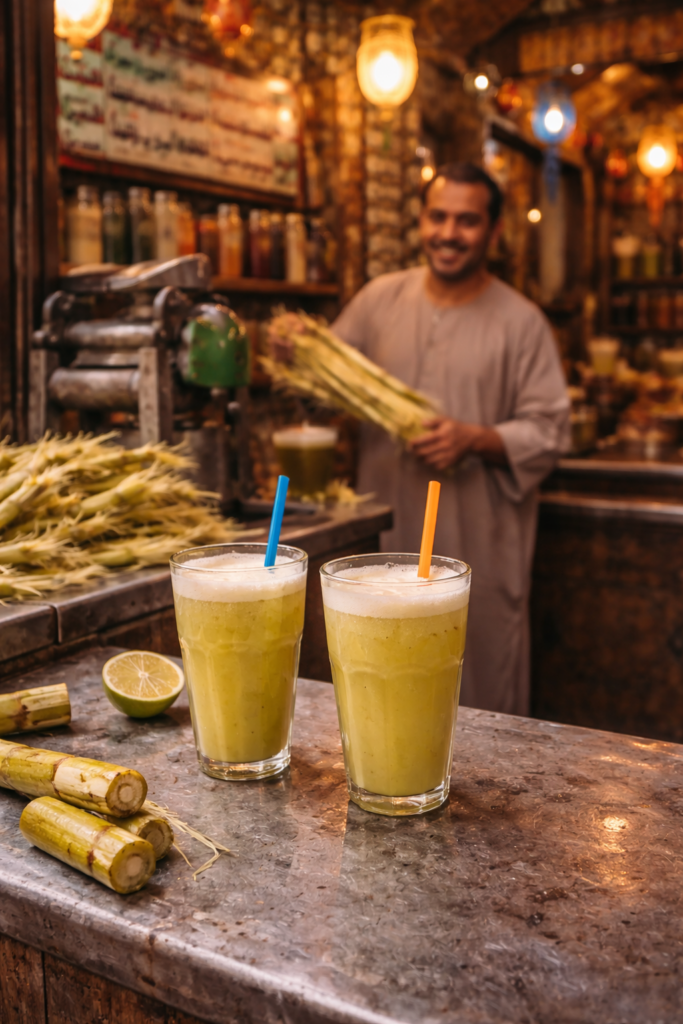
Sugarcane juice, Aseer Asab, is the Egyptian secret to beating the heat. It is a pure, vibrant green juice made from sugarcane stalks.
You’ll find this refresher across the world, but the Egyptian experience adds to its magic.
After a hot tour under the sun, Asab is the perfect reset. At busy street juice shops, vendors push thick sugarcane stalks into presses, pouring the juice from a height to create a light, foamy top.
This juice is a common delight for Egyptians of all ages. It is a natural, healthier alternative to sodas.
Tarot Tours Tip: It’s customary to sip Aseer Asab quickly, even before leaving the shop, to avoid fermentation.
Halabessa
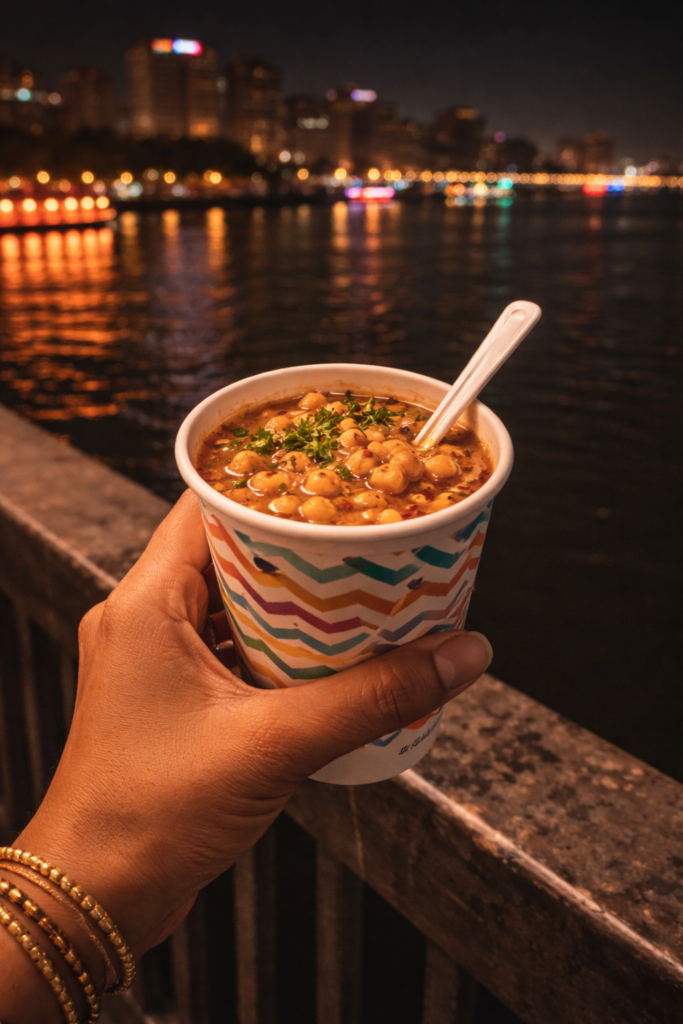
Halabessa is a warm, savory drink often found at small carts by the Nile or the Mediterranean Sea.
It offers a rich, earthy aroma, made from boiled chickpeas, tomatoes, lemon juice, cumin, and a sprinkle of chili.
On winter evenings, locals gather along corniches, savoring steaming cups while chatting or watching the waters.
You can consider Halabessa a light, nourishing meal. The chickpeas provide a healthy, low-calorie sustenance. Its spiced broth is known to warm the body in the cold and soothe the chest after a hard cough.
Sahlab (Salep)
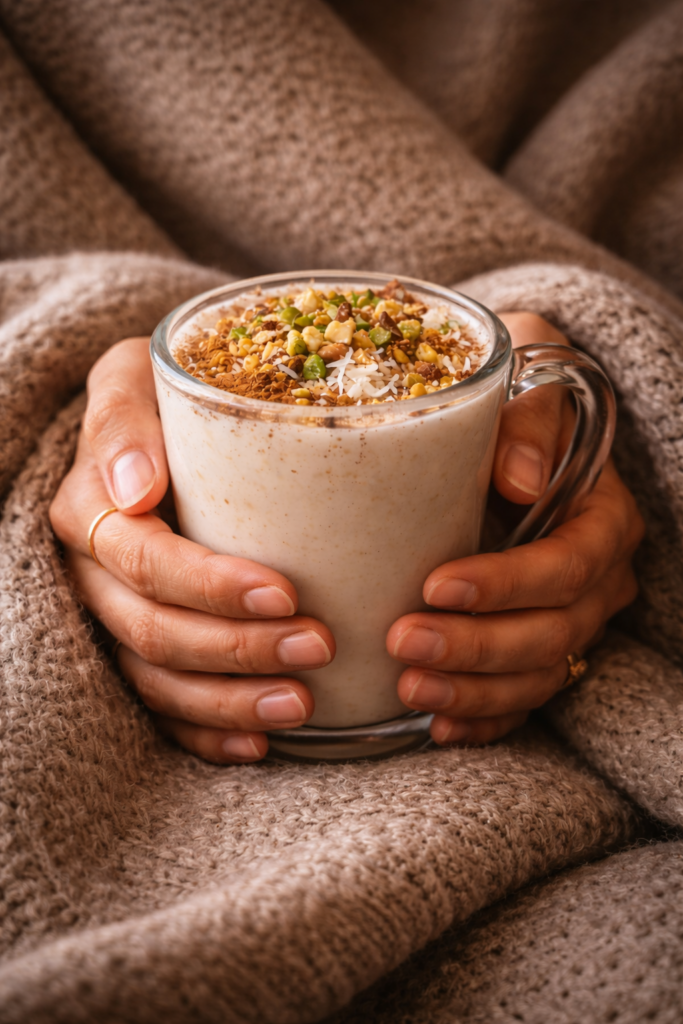
This thick, creamy hot milk drink is another one of the localized Egyptian drinks.
The original Sahlab recipe comes from the ground root of a wild orchid, which gives it a distinct, silky texture.
Due to the orchid’s scarcity, the Egyptian Sahlab enjoyed today is almost always made with a base of milk, cornstarch, and sugar, flavored with rose water or vanilla. This accessible adaptation makes it a favorite winter warmer for everyone.
Locals generously top their Sahlab with a dusting of cinnamon, shredded coconut, and crushed nuts like pistachios or walnuts.
Kharoub

Kharoub is a lesser-known Egyptian drink with a deep, chocolate-like flavor.
It is a comforting, caffeine-free alternative to tea and coffee, made from boiled carob pods.
Kharoub is known as a traditional remedy for digestive issues and sore throats. Rich in vitamins and minerals, it is considered a natural energy drink.
Essential Egyptian Drinks in Ramadan
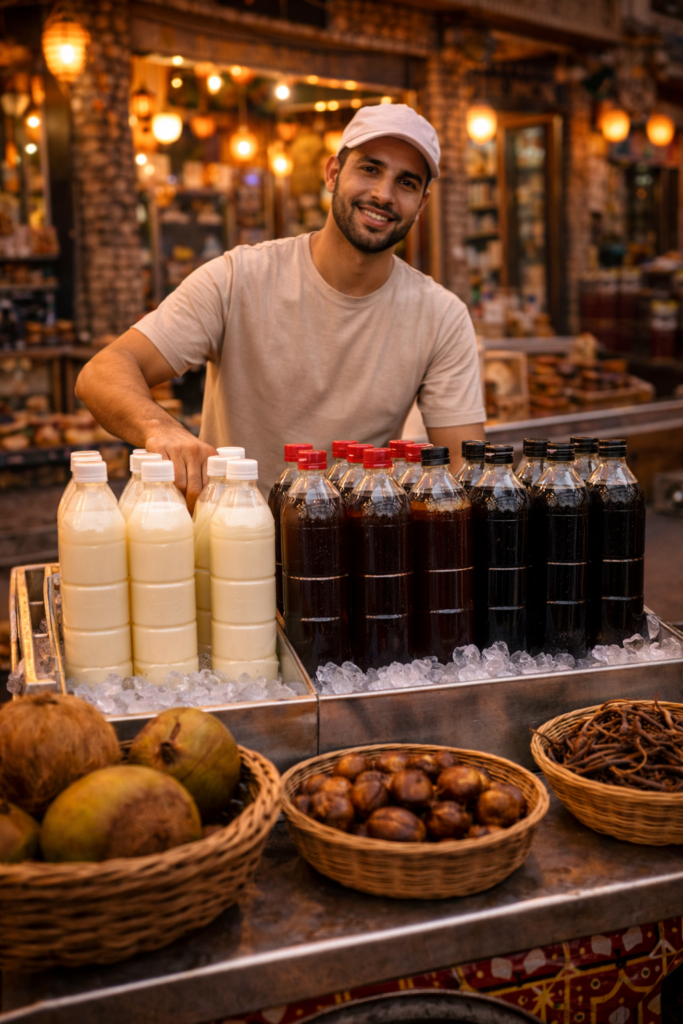
As sunset approaches during Ramadan, vendors set up near mosques and historic streets to share cherished Ramadan drinks. You’ll likely see locals pick up glasses or bottles of these drinks to enjoy fresh during Iftar or Suhur.
Tamr Hindi (Tamarind)
Tamarind, or Tamr Hindi, holds a story in its name. Though its Arabic name translates to “the date of India,” this ancient tree first took root in Africa long before Arabs discovered it in the east.
To prepare, Egyptians boil or soak the finger-shaped pods. Then, they strain and sweeten the drink, sometimes with rose water.
Tamr Hindi is gentle on digestion and boosts vitamin C, making it the perfect drink to soothe the body before or after a heavy meal.
Erk Sous
Liquorice root is a traditional ingredient in Egyptian cuisine, often used as a natural sweetener in savory dishes. It is also the main component of Erk Sous, one of the beloved Egyptian drinks in Ramadan.
To make Erk Sous, dried licorice root is rinsed, mixed with baking soda and water, and left to soak. After it softens, it is boiled and simmered to extract its flavor. The liquid is then strained, cooled, and served chilled over ice.
Egyptians enjoy Erk Sous for its hydrating qualities. Many locals often have a glass at Suhur, believing it reduces thirst during the fasting day.
Sobia
Sobia is a creamy, cool drink beloved during Ramadan. While it’s enjoyed across the Middle East, Egypt’s version has a distinct character.
The Egyptian recipe is simple and comforting. It blends soaked rice with coconut milk, sugar, and a hint of vanilla. The mixture is strained until perfectly smooth and served ice-cold.
It is the taste of a peaceful evening. After the fast is broken at Iftar, a chilled glass of Sobia is the perfect companion to sweet desserts. Its mild, creamy sweetness provides a refreshing end to the day.
The Art of Egyptian Tea
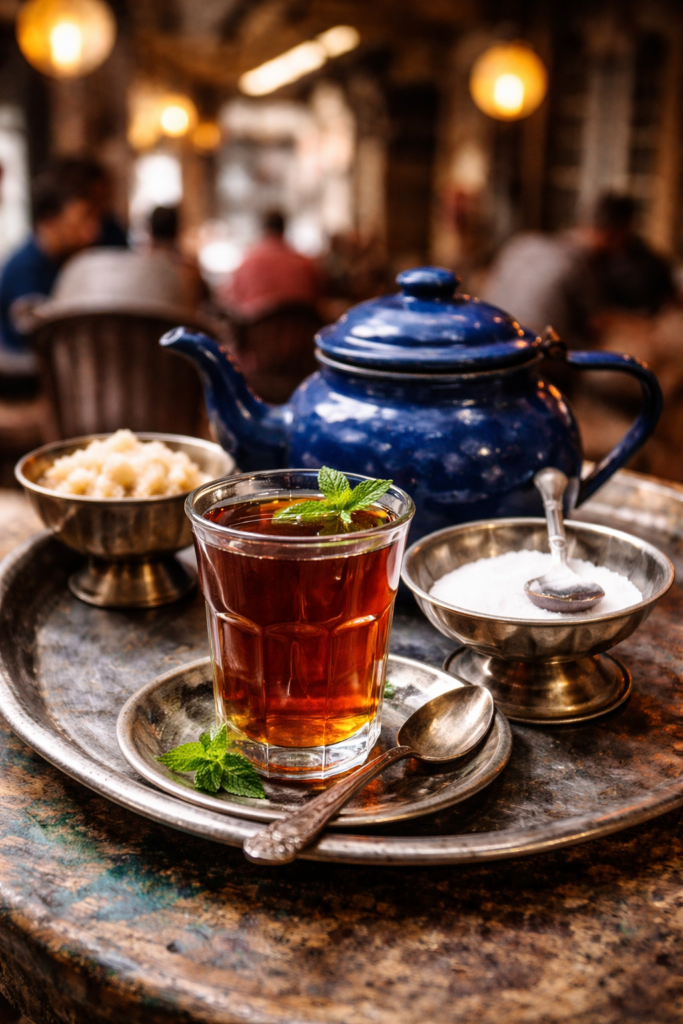
While tea is not native to Egypt, it has become central to daily life and hospitality.
For Egyptians, there’s no single “right time” for tea.
- Morning tea prepares for what’s ahead.
- Afternoon tea offers a pause from work.
- Evening tea settles the mind.
This devotion has shaped a culture of precision. Even simple black tea is prepared with care, and each brewing method has its own name.
At home, milk tea sparks friendly debate over the perfect tea-to-milk ratio. No two households agree, and everyone is convinced theirs is right.
Across Egypt, tea also adapts to place.
In the Sinai deserts, Bedouins welcome guests with Marmarya tea, boiled over an open fire with wild sage, cardamom, and sometimes cinnamon. It is often the first thing offered after a long tour in the desert.
How to Order Tea at an Egyptian Ahwa
You’ll find traditional Egyptian Ahwa (“café”) on street corners nationwide, especially in between Cairo’s historic sites.
These local cafés are identifiable by their simple wooden chairs and tables. However, ordering the most common drink, tea, isn’t so simple.
Whenever you need a rest from a tour, make sure to stop at an Ahwa and use the table below to order Egyptian tea exactly to your taste.
| Tea | Description | How to Say It |
|---|---|---|
| Shai Sokkar Barra | Black tea served plain, with sugar offered separately on the side. | Shai Sok-kar Bar-ra |
| Shai Koshary | Tea and sugar placed in the cup first, then boiling water is poured over them. | Shai Ko-sha-ry |
| Shai Khamseena | Tea and sugar boiled together with water until reduced, then served in a small cup. | Shai Kham-see-na |
| Shai Maya Beeda | One teaspoon of tea and three teaspoons of sugar, topped with boiling water. | Shai Ma-ya Bee-da |
| Shai Tayyara | A tea bag steeped quickly in hot water. | Shai Tay-ya-ra |
| Shai Bil Ni’na’ | Black tea brewed with mint leaves and two to three teaspoons of sugar. | Shai Bil Ni-na |
| Shai Marmarya | Black tea with marmarya leaves, cardamom pods, cinnamon, and sugar. | Shai Mar-ma-rya |
| Shai Barbary | Black tea with a small amount of milk added. | Shai Bar-ba-ry |
| Shai Meeza | Black tea prepared with a generous amount of milk. | Shai Mee-za |