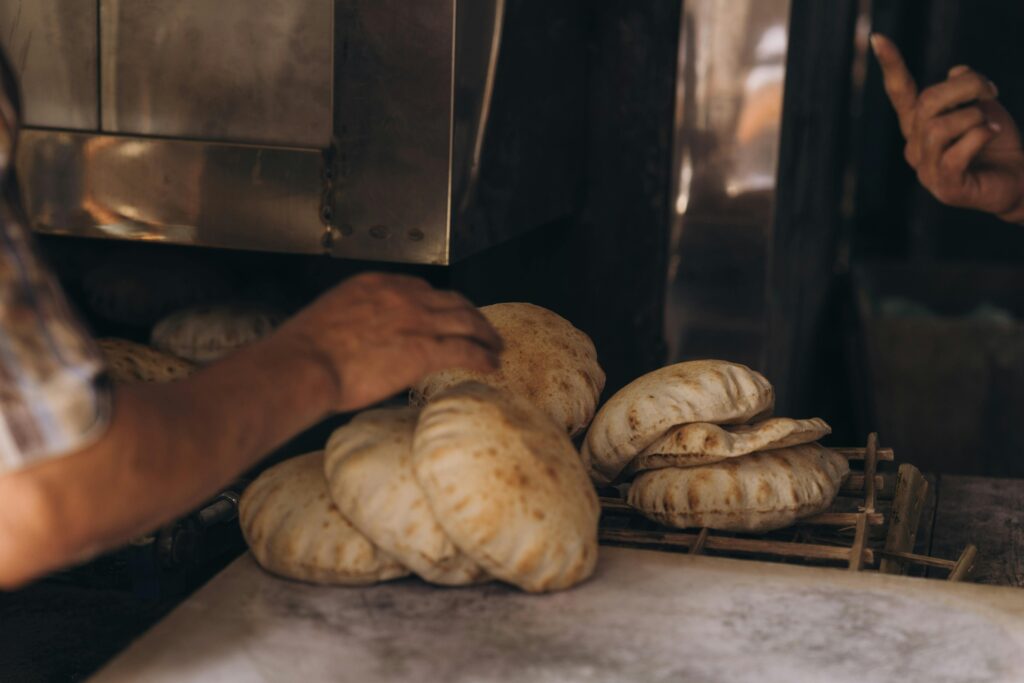
From the time of the pharaohs to bustling modern kitchens,
baladi bread or Aish Baladi has remained a constant on Egyptian tables.
Recipes have evolved.
Ovens have changed.
Neighborhoods have risen, fallen, and begun anew.
Culture itself has been reshaped.
Yet through it all, this Egyptian sourdough has stood its ground.
No longer just a humble, everyday staple, it has become a living cultural ritual,
an enduring thread in the nation’s identity.
Baladi Bread in Ancient Egypt
Bread-making in Egypt is a ritual stretching back nearly six millennia, long before the rise of the pharaohs. It began with emmer wheat, an ancient grain now ground in the world’s first bakeries.
Beyond nourishment, bread was a cultural cornerstone, central to daily life. Egyptians of all classes revered the baking process, depicting it in tomb paintings and temple carvings.
The bread itself became a promise of stability and warmth. Ancient Egyptians preserved loaves for the departed, dried and sealed, ensuring the soul in the afterlife would never hunger.
Archaeologists discovered loaves of barley and chickpea buried with the greatest kings, including the remarkable Tutankhamun’s tomb.
How to Make Baladi Bread (Authentic Egyptian Sourdough Pocket Bread)
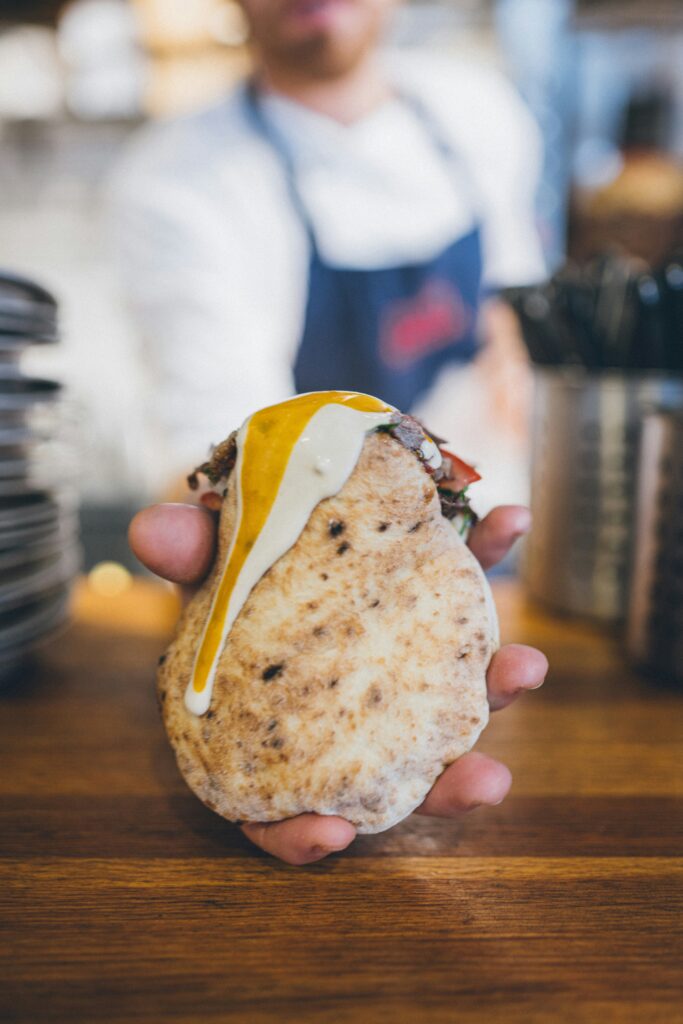
Baladi bread is Egypt’s everyday flatbread—an ancient, naturally fermented Egyptian sourdough pocket bread still baked daily in homes and neighborhood bakeries across Egypt. Simple, nourishing, and naturally vegan, a typical baladi loaf contains around 150 calories, depending on size and flour blend.
If you want to try this timeless process at home, here’s an authentic, easy baladi bread recipe you can follow step by step.
Ingredients (Makes 8–9 Loaves)
- Whole wheat flour – 3 cups
- Active dry yeast – 2 teaspoons
- Warm water – 1¼ cups
- Salt – 1 teaspoon
- Oil – 2 teaspoons
- Wheat bran or extra flour (for dusting)
How to Make Baladi Bread at Home
1. Mix the dough
In a large bowl, combine the flour, salt, yeast, wheat bran, and oil. Gradually add warm water while mixing until a soft dough forms.
2. Knead
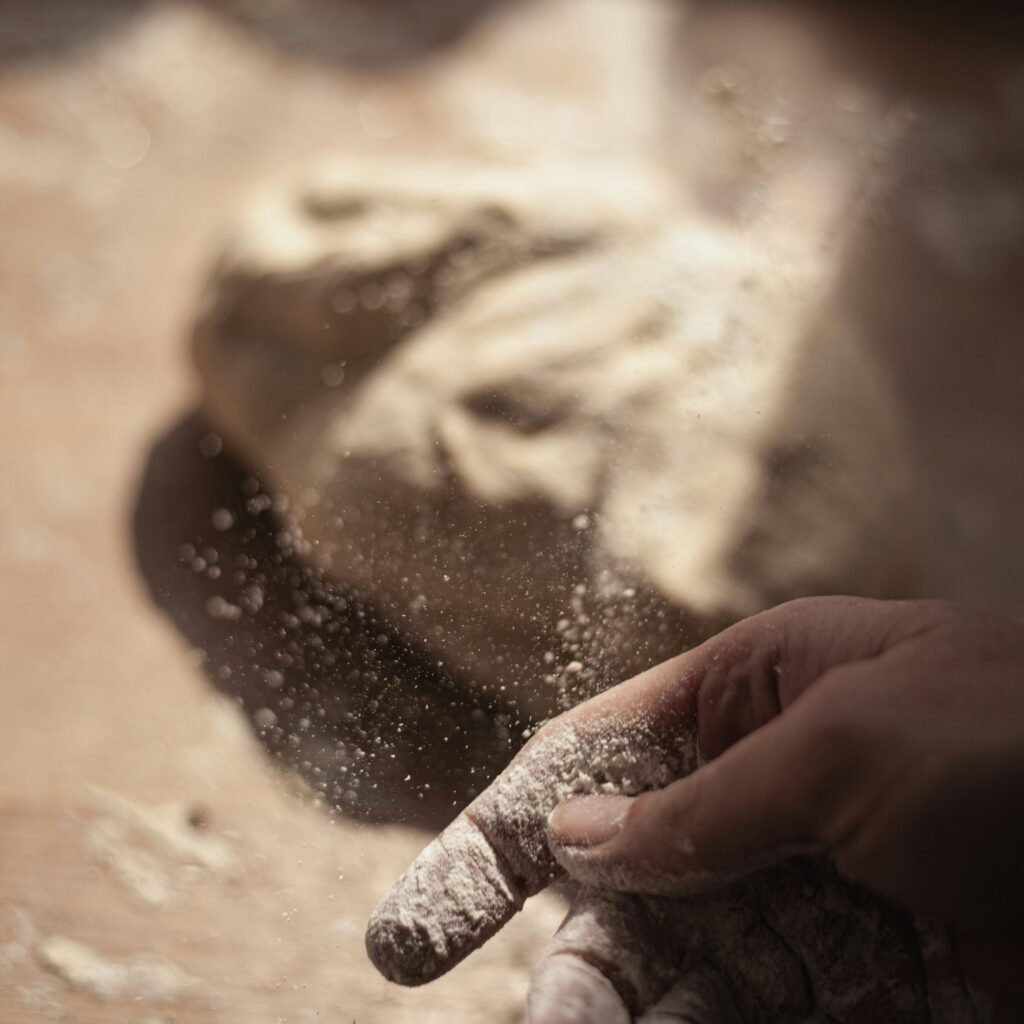
Transfer the dough to a lightly floured surface and knead for 8–10 minutes until smooth, elastic, and slightly tacky.
3. First rise
Cover the dough and let it rise in a warm place until puffy and nearly doubled in size (about 60–90 minutes).
4. Divide and rest
Gently deflate the dough, divide it into equal balls, and let them rest for 10 minutes. This helps relax the gluten for easier shaping.
5. Preheat the oven
Preheat your oven to its highest setting. Place a baking stone or heavy baking tray inside to heat—this is key for proper puffing.
6. Shape the bread
Flatten each dough ball into a circle about ¼ inch thick. Lightly sprinkle with wheat bran or flour and place on a floured surface or baking sheet.
7. Bake
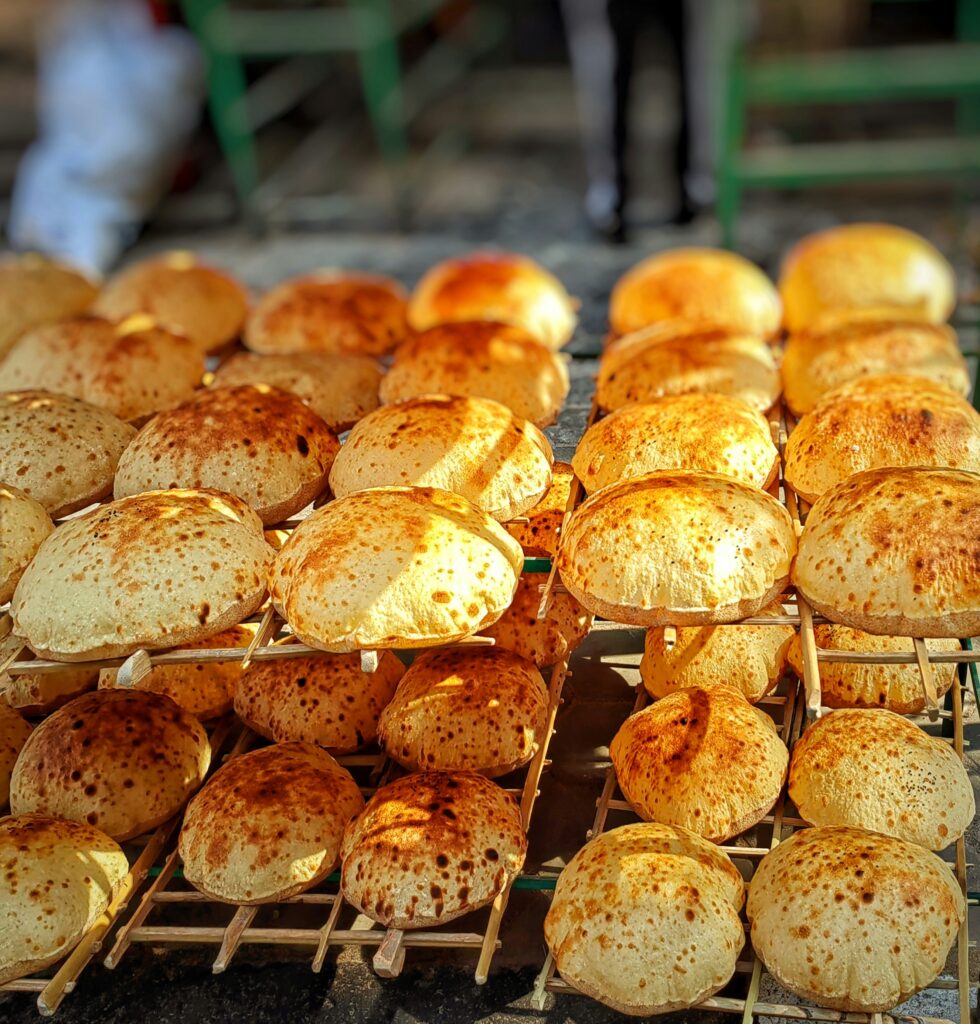
Transfer the dough onto the hot stone or tray. Bake until the bread puffs fully and develops light golden spots, about 2–3 minutes per side.
8. Serve or store
Enjoy baladi bread warm, or let it cool and store it in the refrigerator or freezer for later use.
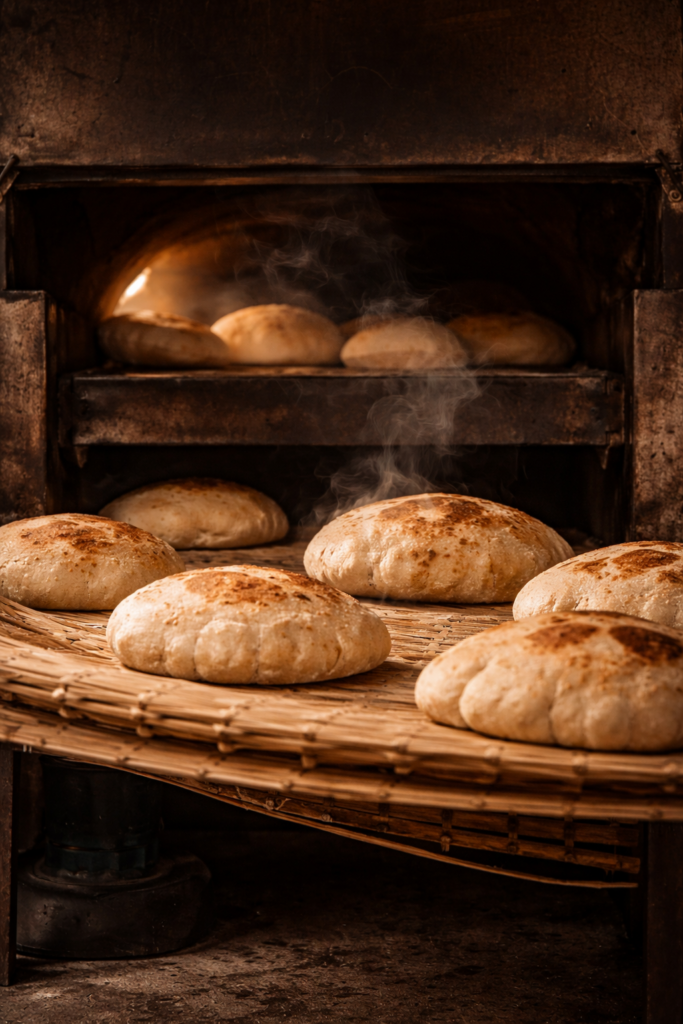
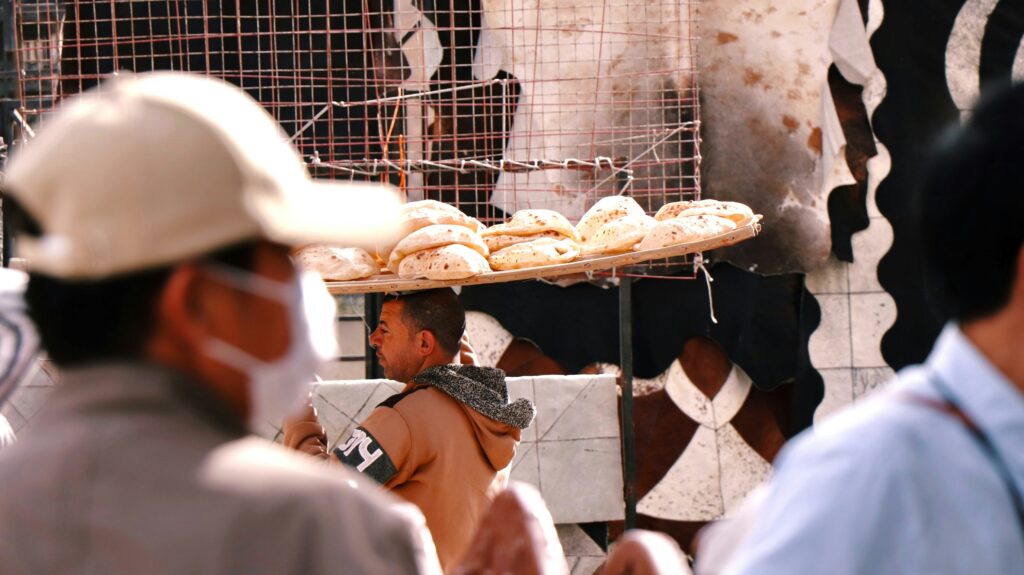
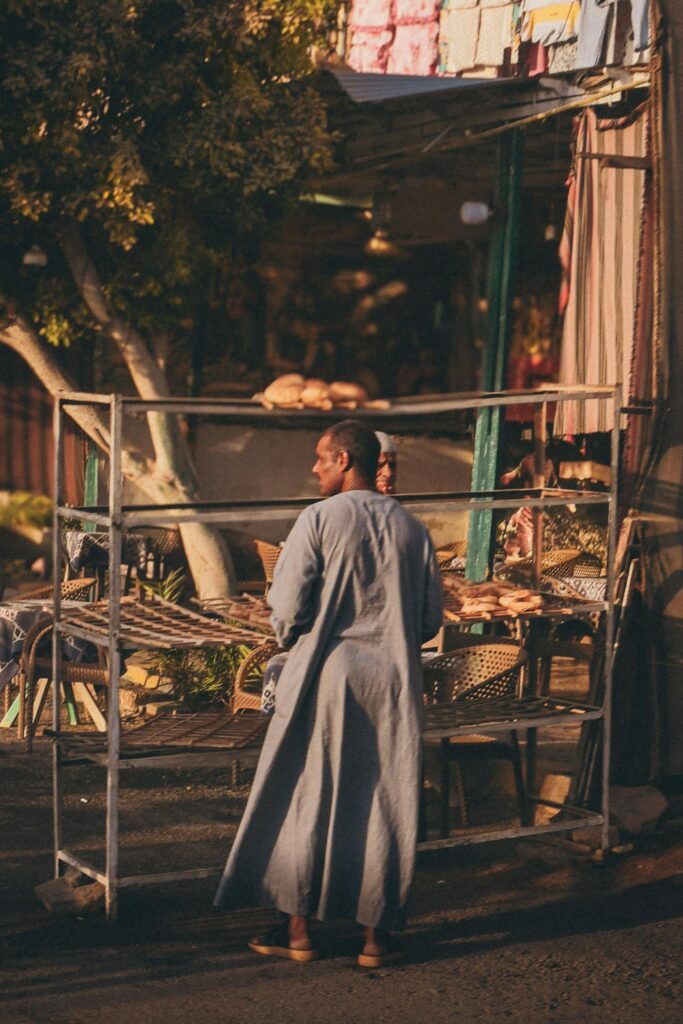
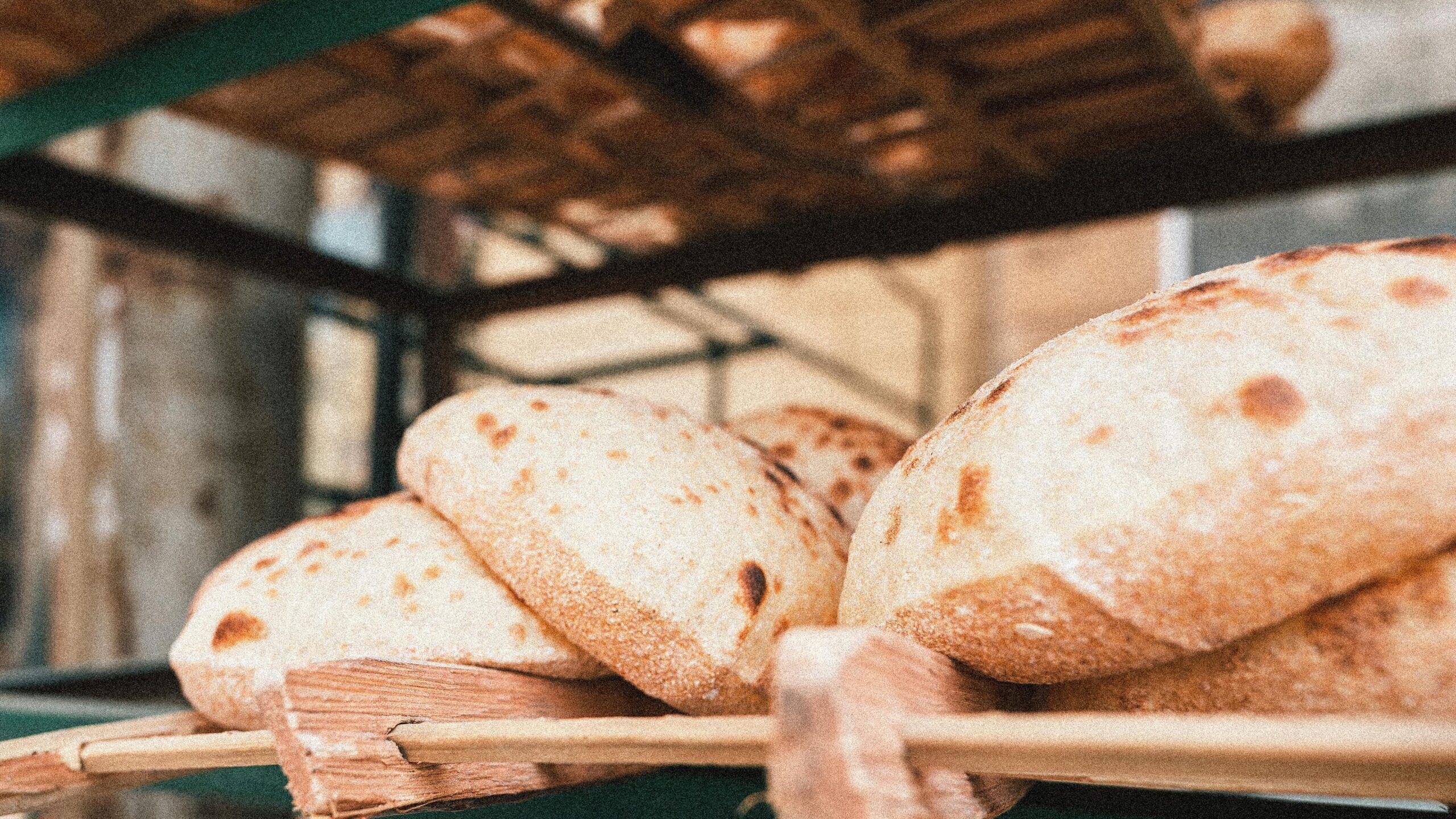
If you’d rather not bake at home, baladi bread is still made fresh in local bakeries on nearly every corner in Egypt. Watching dough glide into roaring conveyor ovens and emerge moments later as warm, puffed loaves is a simple, almost meditative experience, and a reminder that this ancient bread is very much alive today.
Bread as Life in Modern Egyptian Culture
For Egyptians, food is a living cultural ritual. And in a society that prizes hospitality, baladi bread stands at its center, a window into Egypt’s norms and etiquette.
The presence of this sourdough is absolute in every home, from the mud-brick kitchens of Aswan villages to the high-rise apartments of Alexandria.
Its significance is etched into the language itself. While bread is commonly called “khobz” across the Arab world, Egyptians call their bread “aish” (“live” or “living”). Paired with “baladi” (“authentic”), the very name aish baladi becomes a poetic declaration: authentic life.
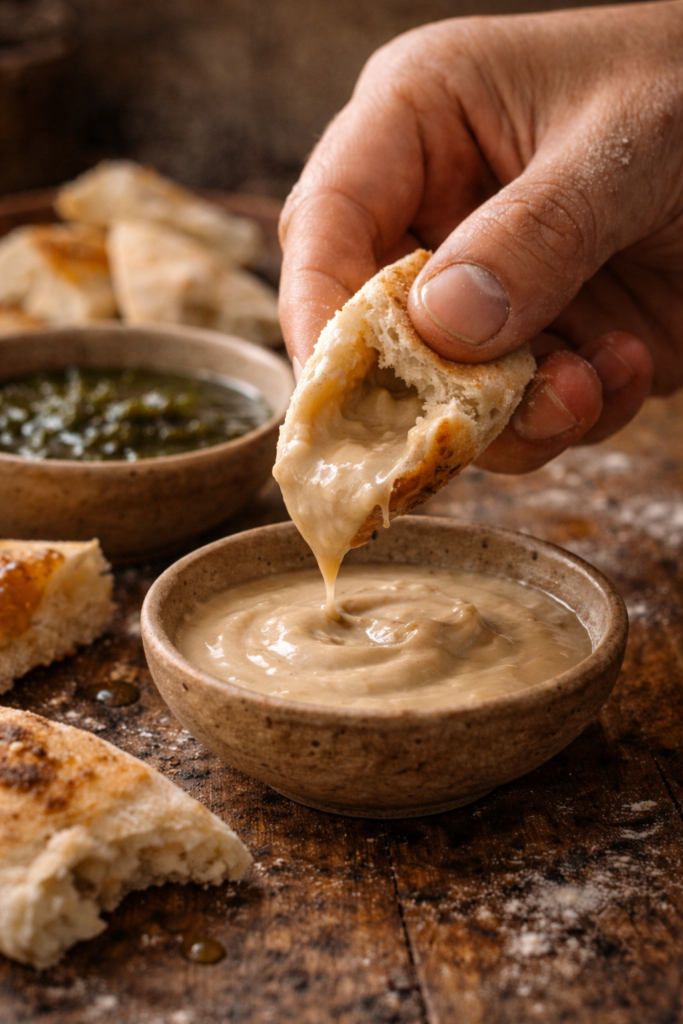
This “authentic life” carries a warm flavor that infuses the baladi bread’s profound versatility.
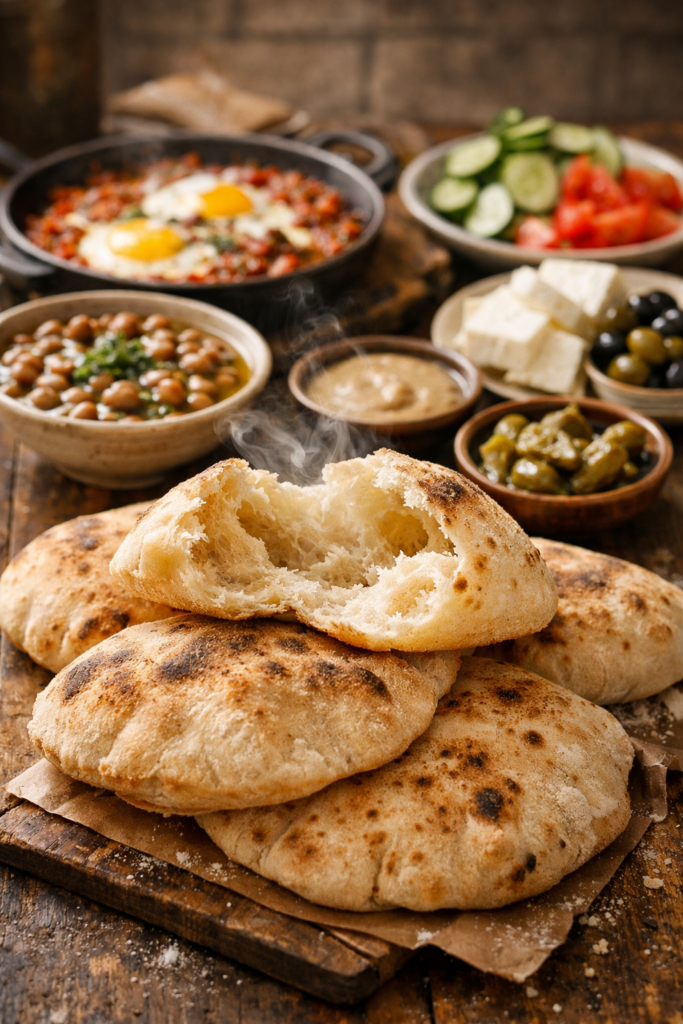
It can be opened into a pocket and filled with cheese, fuul and falafel, grilled kebab, tomatoes, and eggplants.
When locals tear it into small triangular pieces, called a “cat’s ear,” it scoops up stews like molokhiya or dips such as tahini, honey, and fig jam.
Crisped over a flame, it forms the base of celebratory dishes like fatta or adds crunch to soups.
Fun Fact
In Egypt, sharing bread isn’t just eating together, it’s making a pact.
The phrase “Aish wi milḥ” (عيش وملح) literally means “bread and salt,” but culturally it means loyalty, trust, and shared life. If two people have eaten “aish wi milḥ” together, there’s an unspoken bond between them, a promise that neither will betray the other.
Why bread and salt?
- Bread (ʿaish) = life itself
- Salt (milḥ) = permanence (it preserves; it lasts)
Together, they symbolize a life shared and remembered.
That’s why in Egypt, breaking trust after sharing “aish wi milḥ” isn’t just rude, it’s deeply dishonorable. You didn’t just share a meal. You shared life.
(And yes, this belief is still very real today, from family tables to business deals.)
Egyptian Baladi Bread from Cairo to the World
Egyptian sourdough is earning global recognition, driven by strong export initiatives.
A key leader in these initiatives is AM Foods Group, one of Egypt’s premium food distributors. The company, led by Founder Jalal Abu Ghazaleh, successfully introduced the homegrown Baladi bread to one of the largest supermarket chains in the US.
In an interview with EnterpriseAM, Abu Ghazaleh reflected on the bread’s runaway success in the US market, declaring it had unequivocally “hit the jackpot.”
This success was ignited by a digital fanfare for the authentic bread across social media. The story began in the feeds of the Egyptian diaspora, where heartfelt reels expressed a poignant nostalgia for this tangible taste of home.
The authentic wave of longing fueled broader curiosity. Local food enthusiasts began documenting their own “first taste” experiences, sharing the bread’s unique texture with a captivated international audience.
The export initiative has blossomed into a cross-cultural conversation centered on a simple, ancient loaf.