
Between Luxor and Aswan, the engine noise stops.
A dahabeya Nile cruise moves by sail. When the wind fails, a small tug takes the bow. What you hear instead is water against the hull, a fisherman calling across the current, a boy talking to his buffalo on the bank.
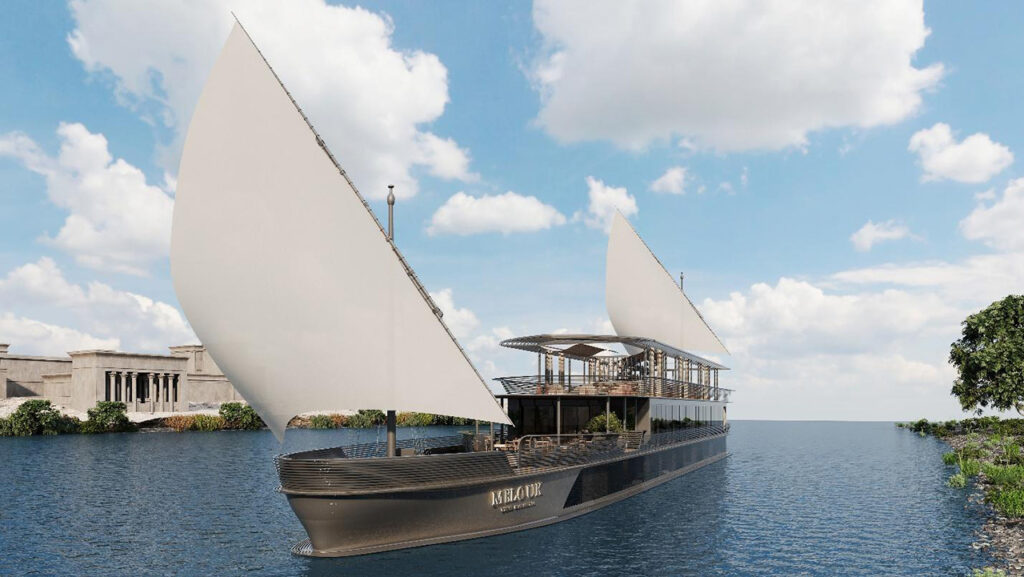
That difference sets the terms for everything else aboard. Sailing rather than steaming means the vessel can berth at village landings and river islands that larger ships cannot approach. It also means a few days of unmatched intimacy and proximity to the water. Melouk (“Kings”) and Malekat (“Queens”) were built around that closeness.
Why Launch a Pair of Nile Dahabeyas?
Because true luxury isn’t about extravagance; it’s about connection to a place, to a culture, to the people who welcome you into their world.
The Oberoi Melouk & Malekat Nile dahabeyas are designed for those who don’t just want to see Egypt but to feel it. It’s a journey where luxury means sailing close to the water, where the Nile itself becomes your companion, and where every sunset is savored from a spacious deck with a cocktail in hand and the hum of a traditional oud floating in the air.
Designed for Elegance, Crafted for Comfort
Luxury isn’t luxury unless it’s functional. This belief guided every aspect of the dahabeyas’ design.
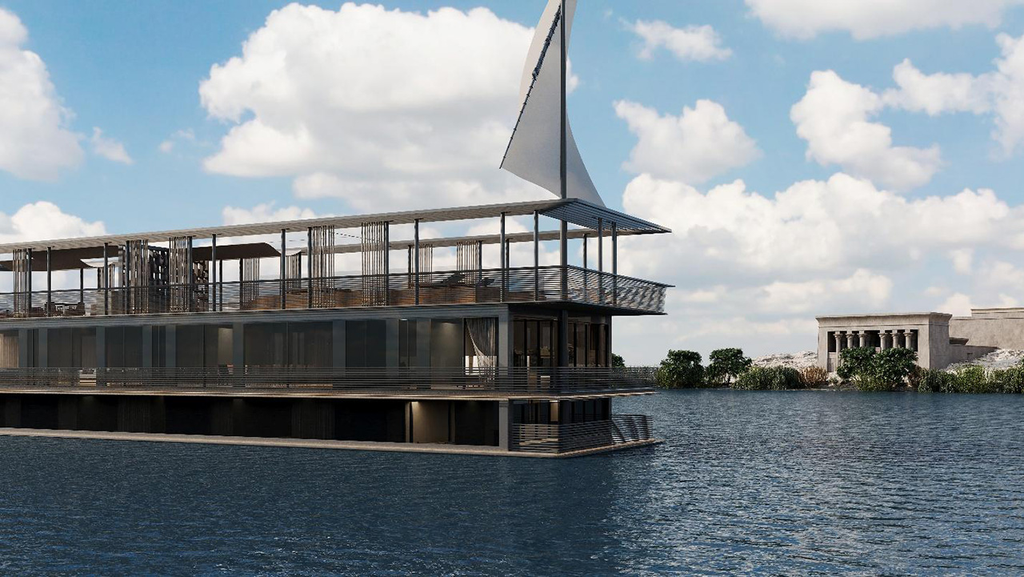
Each vessel runs 55 meters, with cabins at 26 square meters. A hull with this width makes cabin size a choice rather than a coincidence. Space was prioritized over cabin count.
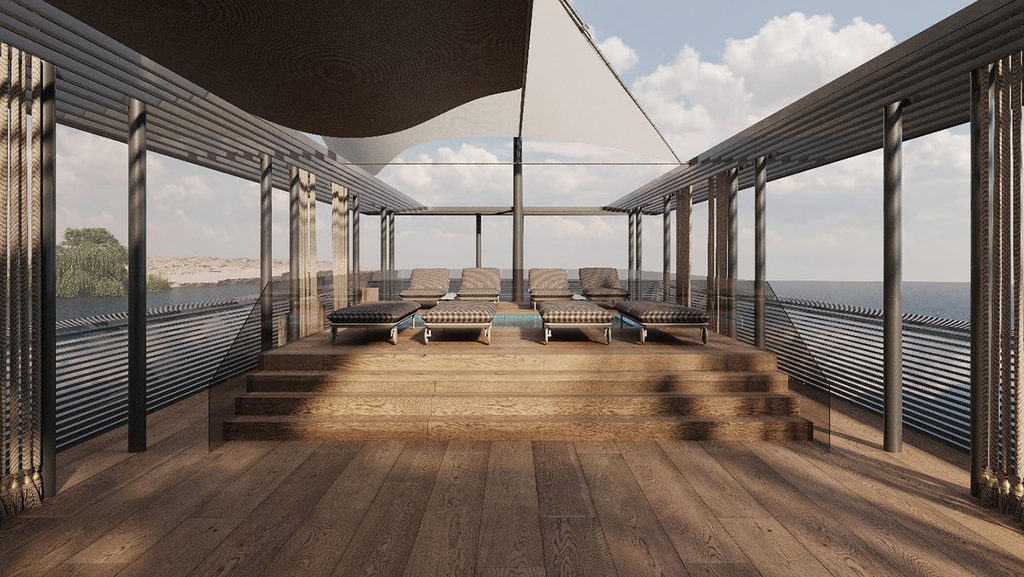
There is a plunge pool on deck, which very few vessels in this category carry, designed for guests to relax and unwind between tours.
Inside, the furnishings hold a strong Egyptian feel, blending heritage with modernity. Mood lighting and remote-controlled curtains bring luxury and comfort to every room sailing the Nile.
The cutlery is custom Italian. The cups, the tableware, and the towels are handmade, not sold commercially.
A Culinary Experience to Remember
There is no buffet at any point in the sailing. Every dish is made to order, with sharing-style options for tables that want them.
The reasoning is simple. Volume dining exists to serve hundreds of people quickly, and a dahabeya carries nothing close to that number. Excessive food is rarely equally good food. The kitchen works Egyptian regional cooking against an international standard, with a light Indian thread that acknowledges where Oberoi comes from.
Wellness on the Nile
The spa blends Egyptian oils with a play on the Indian chakras, and no two therapy sessions are built the same way. Mornings open with basic yoga or guided stretches on the sundeck. Nothing advanced.
The People Behind It
Oberoi service doesn’t follow a script. It’s the heartfelt, genuine care of a crew that anticipates your needs before you do. It’s the warmth of being looked after not because it’s required, but because it’s who they are.
One word is deliberately avoided on board. Nobody calls the vessel a home.
The reasoning is unsentimental and correct. This is not anyone’s home, and it should not try to be. If a guest wanted home, they would have stayed there. What Melouk and Malekat offer instead is the feeling of being comfortable in an unfamiliar country, held by people who know it well.
A Journey Etched in Memory
What will guests remember most? Not just the grandeur. Not just the sites. But how they felt. The small moments. The way Egypt opened itself up to them, not just as visitors, but as welcomed guests.
Nile dahabeyas have existed for centuries. But the Oberoi Melouk & Malekat redefine what a Nile cruise can be.
Like the Oberoi Zahra launch in 2007, this isn’t just another offering. It’s a shift in the very concept of Nile luxury. A heartfelt experience, curated with care, delivered with soul.
Discover more Nile cruises or explore our Egypt tour packages.